By Carolina A. Miranda
Buenos días! And welcome to the Essential California newsletter. It’s Thursday, Nov. 17 — a.k.a. the middle of Scorpio season. And I’m Carolina A. Miranda, The Times’ art and design columnist and author of the Essential Arts newsletter, here with everything California.
Early last month, comedian John Oliver devoted an entire episode of his show to looting, offering a broad and very funny 101 on the ways in which Western arts institutions (auction houses, museums, art dealers, collectors and more) have been complicit in the trade of objects that were — to put it elegantly — stolen. The segment hopscotches from the British Museum in London to the Metropolitan Museum in New York, but what most caught my eye was a segment that showed elders from the Eastern Shoshone and Northern Arapaho tribes going to visit their culture’s artifacts at the Field Museum in Chicago.
In a secure storage unit, accessed only by card key, they find their culture’s most important spiritual artifacts tucked into boxes labeled with Sharpies. The elders look devastated. In Native tradition, ceremonial objects are regarded as living, imbued by the spirits of ancestors. Entombing them in the bowels of a museum, therefore, is to rob them of life. On camera, Northern Arapaho Chairman Jordan Dresser expressed his dismay. “When I think about objects that belong to tribal members just sitting there in the dark,” he said, “I felt angry.”
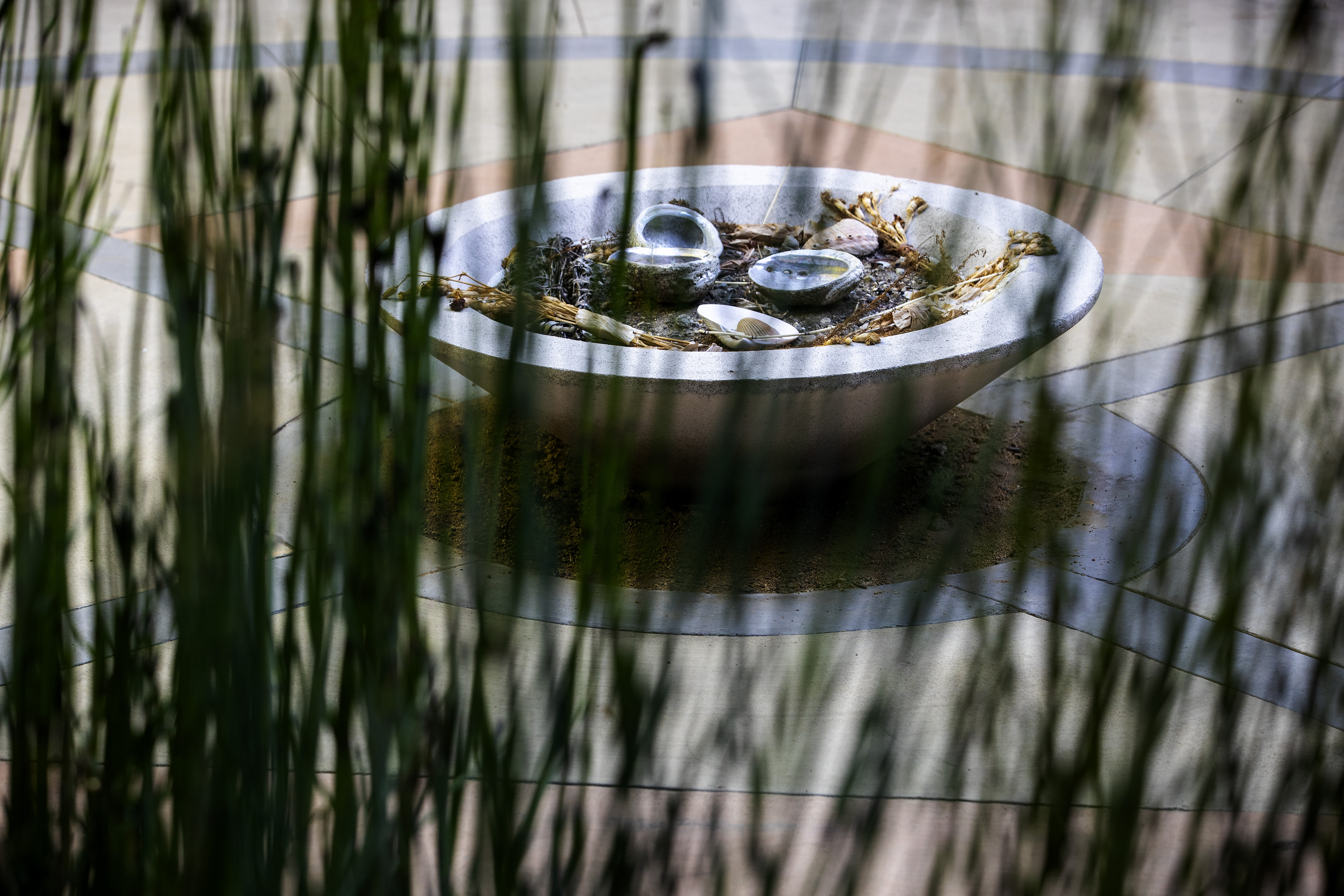
In recent years, some museums have begun to take a new approach to how they steward ceremonial objects — and L.A.'s Autry Museum of the American West is an important player in that shift. Late last month, the museum opened a new Resources Center in Burbank, a $32-million, 100,000-square-foot facility intended to harbor the museum’s collections of Native and other artifacts. It also provides a specially designed ritual space for California’s Indigenous peoples, who can now employ sacred objects held in the collection in ceremonies.
It’s been an epic undertaking.
In 2003, the Autry merged with the Southwest Museum — founded by Charles Fletcher Lummis in 1907 — putting it in charge of more than 400,000 Indigenous objects, including baskets, beadwork, ceramics and ceremonial regalia. These had been stored at the Southwest Museum’s Highland Park building. But that structure suffered from poor climate control and leaks, requiring the Autry to find a new place to harbor the collection.
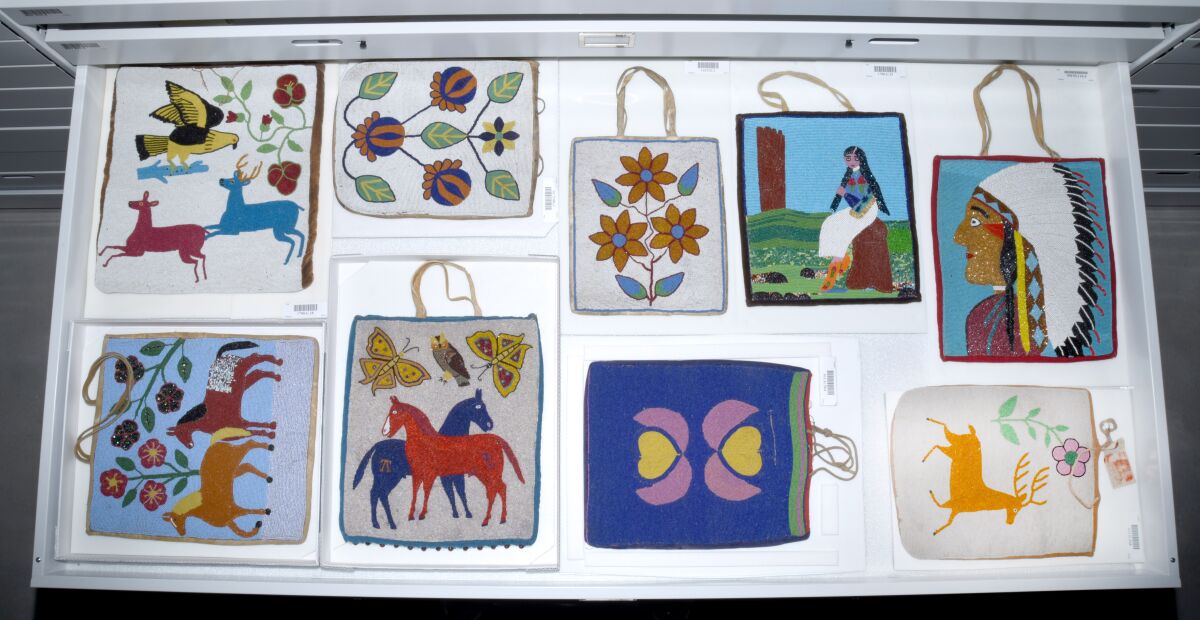
Beaded pouches from the Great Plains at the Autry Museum’s new Resources Center in Burbank. (From the Autry Museum of the American West)
Enter the Resources Center in Burbank, designed by L.A. firm Chu-Gooding Architects, with landscape design by the Native-owned studio Costello Kennedy Landscape Architecture. The center now accommodates the collections of both the Southwest Museum and the Autry (including Gene Autry’s fantastic cowboy bling), and offers a dedicated place for local Indigenous communities to access their treasures. (The center is open to the public by appointment.)
As the museum’s vice president of Native collections, Joe Horse Capture tells Times culture writer Deborah Vankin: “The idea of creating a facility where Native people can engage with works their ancestors created, and work collaboratively and have access — which they haven’t had for many, many years — I think is really, critically, important to the cultural heritage and also the Autry’s relationship with tribes.”
In a fascinating dispatch, Vankin goes deep on what it meant to relocate hundreds of thousands fragile artifacts from one part of Los Angeles to another. (It involved art handlers ascending and descending a 3-foot-wide spiral staircase bearing one object at a time.) The entire, wildly complex process was undertaken with guidance from a Native advisory committee organized by a cultural consultant from the Gabrielino-Tongva community.
The new center is expanding the idea of what the care of a collection might mean.
“The ceremonial space was meditative and beautiful — an airy respite from storage,” Vankin tells me of her visit. “And there were, on the day I visited, small shells and bits of what appeared to be dried plants or ash in the ceremonial altar, which had recently been used by visitors. So it felt very much alive, not just a pretty architectural appendage.”



No comments:
Post a Comment