Editor's note: Essential California published late today due to some technical difficulties. We apologize for the inconvenience.Good morning, and welcome to the Essential California newsletter. It’s Wednesday, Aug. 23. I’m Noah Bierman, a reporter for The Times based in Washington.
When it comes to homelessness, almost every story pivots to California. That was the subplot as I traveled to Jackson, Miss., Detroit and Jacksonville, Fla., this summer. I was reporting on why homelessness is so much worse in Los Angeles than in other parts of the country, even as other cities also combat poverty, drug addiction and crime — and enjoy warm weather like L.A.
California has about a third of the nation’s homeless population, making it a test kitchen for ideas, a subject of pity and scorn and a cautionary tale as homelessness grows around the country.
Again and again in abandoned buildings, nonprofit offices and tours of homeless shelters, people had something to say about Los Angeles, California or both.
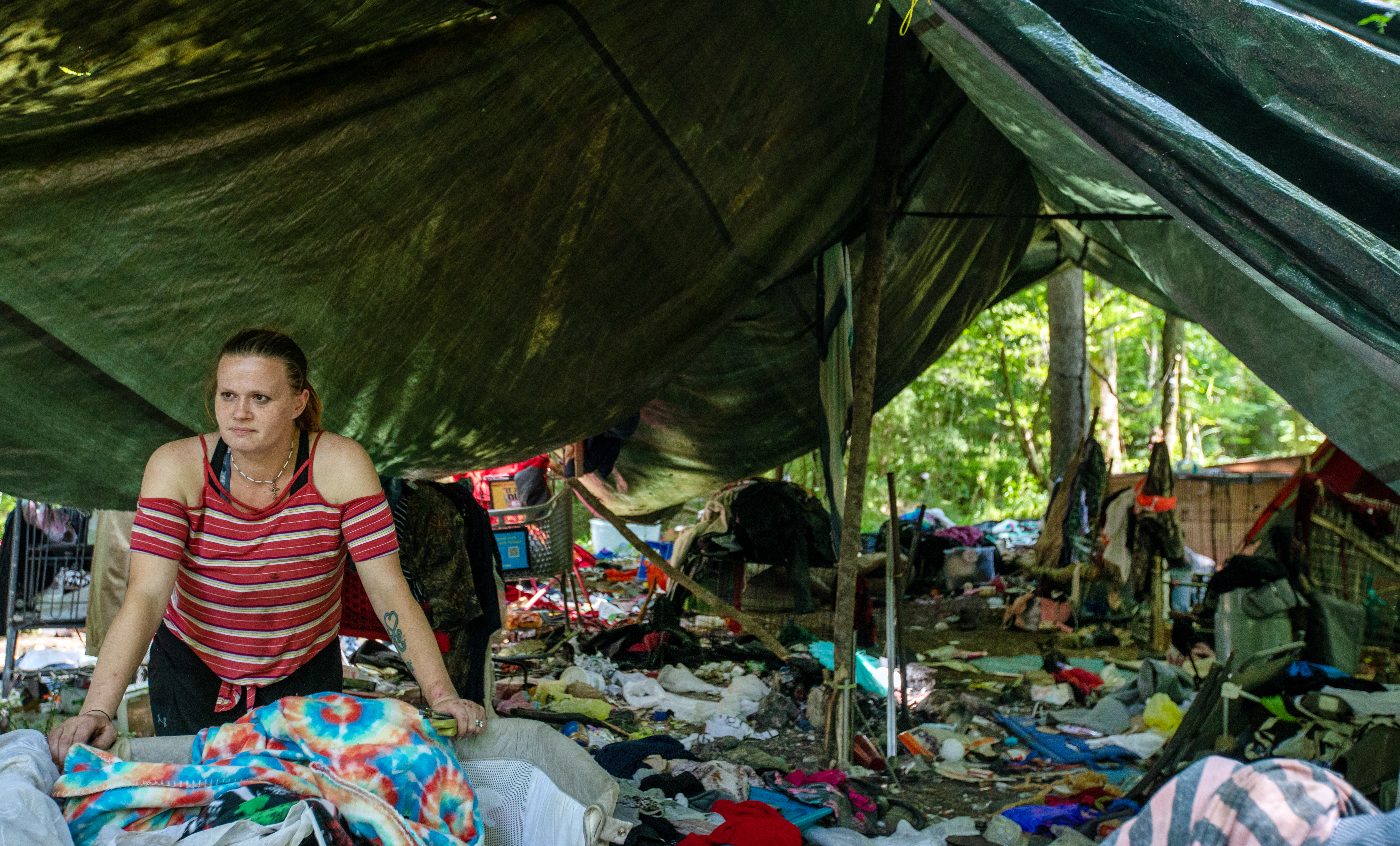
A woman named Terra Wilmoth, who had recently given birth to twins by the side of a creek in Jackson and sometimes survived on sea turtles she and her husband caught, interrupted her harrowing story to weigh in on California.
“I used to live in Bakersfield,” she said. “Unfortunately. It was a horrid place. I was homeless there, too.”
Learning from L.A.’s services
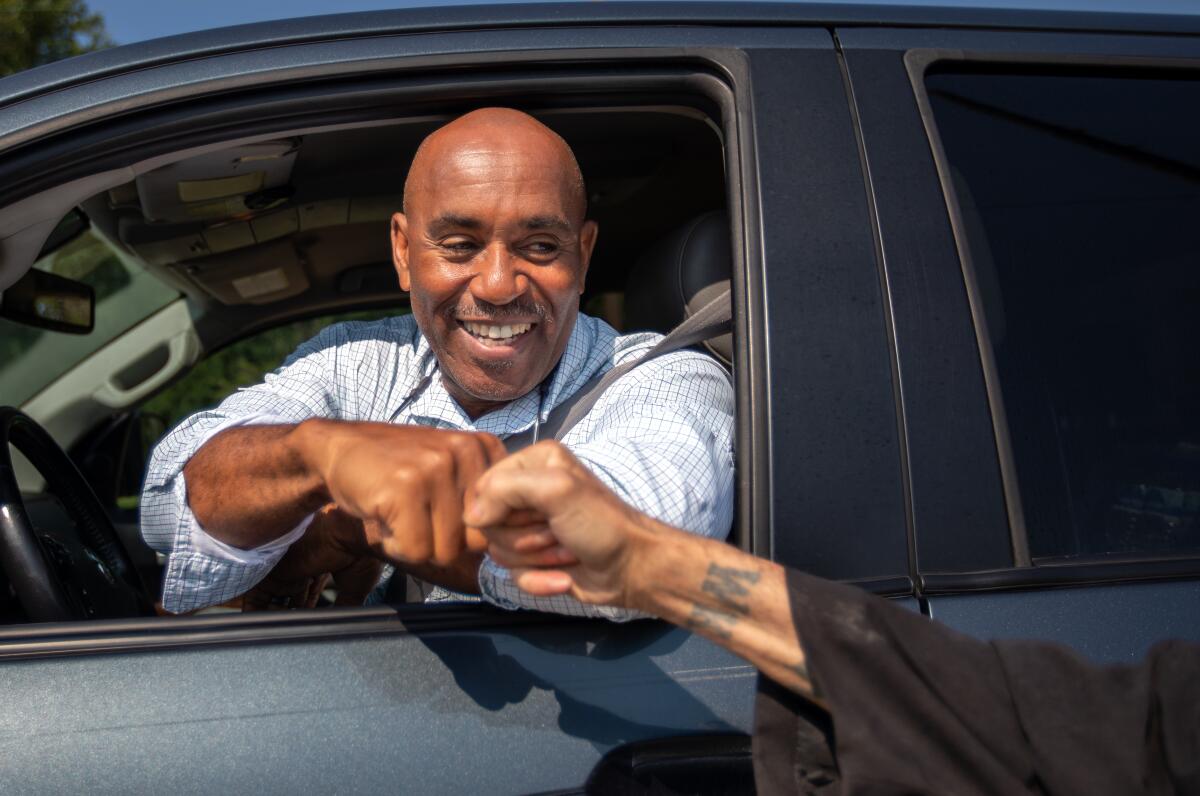
Tommie Brown, a homeless outreach coordinator with Stewpot Community Services, visits with a homeless man in Jackson, Miss. (Francine Orr / Los Angeles Times)
Tommie Brown, an ordained minister and former cop who is now a homeless outreach worker in Jackson, had traveled twice to learn about homeless people in L.A., spending a week each in 2010 and 2016.
Though he lives in one of the poorest places in the country, Brown felt sorry for Los Angeles. At least Mississippi, which has the lowest per capita homeless population in the country, could still be proactive in combating homelessness.
There are enough homeless people in L.A. County alone — an estimated 75,000 — to make up half the population of Jackson.
But Brown did not mock Los Angeles. He came away from his visits inspired by the workers he met at the Dream Center, an L.A. charity, and how they approached people by asking them about their aspirations.
“What is it that you — as a child — what did you want to become, you know, what was your vision for your life?” he said, summarizing the outreach message he heard in Los Angeles.
The experience helped him dispense with preconceived notions about why people experience homelessness — that they’re lazy, or choose to be that way — and instead focus on how he could help them tame drug problems, attend to their mental health or otherwise reengage with society, he said.
Housing, housing, housing
Shannon Nazworth, president & CEO of Ability Housing in Jacksonville, took away another inspiration from California: the movement to change zoning laws to allow more housing types.
“Los Angeles was really groundbreaking in realizing the biggest availability of land is in people’s backyard,” said Nazworth, whose nonprofit group focuses on finding long-term housing and services for homeless people.
While L.A. has liberalized rules to allow more garage apartments and granny flats, there remains some local skepticism.
Many of the Angelenos converting garages into guest houses — particularly higher income people — aren’t renting them out, and are instead using them as guest rooms or pool houses, said Mott Smith, principal with Civic Enterprise Development, an urban infill developer.
But Jacksonville homeless advocates said they like to use Los Angeles as a cautionary tale when they lobby politicians for more affordable housing.
“That’s kind of the example that’s out there,” said Cindy Funkhouser, who heads the Sulzbacher Center, Jacksonville’s main shelter provider. “We don’t ever want to have that intense of an issue.”
More from my reporting:



No comments:
Post a Comment