Arabian riff

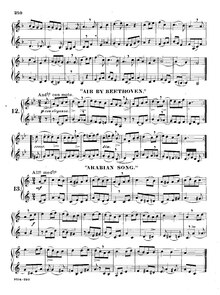
"Arabian riff", also known as "The Streets of Cairo", "The Poor Little Country Maid", and "the snake charmer song", is a well-known melody, published in various forms in the nineteenth century.[1] Alternate titles for children's songs using this melody include "The Girls in France" and "The Southern Part of France".[2][3] This song is often associated with the hoochie coochie belly dance.
History[edit]


There is a clear resemblance between the riff and the French song Colin prend sa hotte (published by Christophe Ballard in 1719), whose first five notes are identical. Colin prend sa hotte appears to derive from the lost Kradoudja, an Algerian folk song of the seventeenth century.[4][5]
A version of the riff was published in 1845 by Franz Hünten as Melodie Arabe.[6] The melody was described as an "Arabian Song" in the La grande méthode complète de cornet à piston et de saxhorn par Arban, first published in the 1850s.[1]
Sol Bloom, a showman (and later a U.S. Congressman), published the song as the entertainment director of the World's Columbian Exposition in 1893. It included an attraction called "A Street in Cairo" produced by Gaston Akoun, which featured snake charmers, camel rides and a scandalous dancer known as Little Egypt. Songwriter James Thornton penned the words and music to his own version of this melody, "Streets Of Cairo or The Poor Little Country Maid". Copyrighted in 1895, it was made popular by his wife Lizzie Cox, who used the stage name Bonnie Thornton.[2] The oldest known recording of the song is from 1895, performed by Dan Quinn (Berliner Discs 171-Z).[7]
The melody is often heard when something that is connected with Arabia, Persia (Iran), India, Egypt, deserts, belly dancing or snake charming is being shown.[citation needed]
The song was also recorded as "They Don't Wear Pants in the Southern Part of France" by John Bartles, the version sometimes played by radio host Dr. Demento.
Travadja La Moukère[edit]
In France, there is a popular song which immigrants from Algeria brought back in the 1960s called "Travadja La Moukère" (from trabaja la mujer, which means "the woman works" in Spanish), which uses the same Hoochy Coochy tune.[clarification needed] Its original tune, said to have been based on an original Arab song, was created around 1850 and subsequently adopted by the Foreign Legion.[citation needed]
Partial lyrics:
Travadja La Moukère | Travaja La Moukère |
In popular culture[edit]
Music[edit]
Since the piece is not copyrighted, it has been used as a basis for several songs, especially in the early 20th century:
- "Hoolah! Hoolah!"
- "Dance of the Midway"
- "Coochi-Coochi Polka"
- "Danse Du Ventre"
- "In My Harem" by Irving Berlin
- "Kutchy Kutchy"[2]
- ''Strut, Miss Lizzie'' by Creamer and Layton
- In Italy, the melody is often sung with the words "Te ne vai o no? Te ne vai sì o no?" ("Are you leaving or not? Are you leaving, yes or no?"). That short tune is used to invite an annoying person to move along, or at least to shut up.
- In 1934, during the Purim festivities in Tel Aviv, the song received Hebrew lyrics jokingly referring to the Book of Esther and its characters (Ahasaurus, Vashti, Haman and Esther) written by Natan Alterman, Israel's foremost lyricist of the time. It was performed by the "Matateh" troupe, under the name "נעמוד בתור / Na'amod Bator" ("we will stand in line").
1900s[edit]
- "Scherzo for String Quartet" by Charles Ives (1904)[8]
1920s[edit]
- The "Little Egypt" segment of the World's Columbian Exposition scene in Show Boat (1927)
1930s[edit]
- "Twilight in Turkey" by the Raymond Scott Quintette (1937)
1940s[edit]
- This tune is quoted in Luther Billis' dance in "Honey Bun" from the musical South Pacific. (1949)
- "Bonaparte's Retreat" by Pee Wee King (1949)
- "Sixteen Tons" by Merle Travis (1946)
1950s[edit]
- "Istanbul not Constantinople" by Four Lads (1953) and They Might Be Giants (1990)
- "Native Dancer" by Abner Silver and Al Hoffman, recorded by Rusty Draper (1953)
- "Nellie the Elephant" by Ralph Butler (1956)
- "Teenager's Mother (Are You Right?)" by Bill Haley & His Comets (1956)
- "Ek Ladki Bheegi Bhaagi Si" from the motion picture Chalti Ka Naam Gaadi (1958)
- "Oriental Rock" by Bill Haley & His Comets (1958)
1960s[edit]
- "The Sheik of Araby" performed by the Beatles during their 1962 Decca audition, with George Harrison as the lead singer and Pete Best on the drums (this track can be found on Anthology 1).
- "Egyptian Surf" by The Temptations (New York vocal group) (1963)
- "I've Got the Skill" by Jackie Ross (US #89, 1964)
- "Revolution 9" by the Beatles (1968)
- "Funky Mule" by Buddy Miles Express (1968)
1970s[edit]
- "The Grand Wazoo" by Frank Zappa (1972)
- "Sharon" by David Bromberg (1972)
- "You Scared the Lovin' Outta Me" by Funkadelic (1976)
- "Open Sesame" by Kool & The Gang (1976)
- "One for the Vine" by Genesis (1976)
- "Egyptian Reggae" by Jonathan Richman and the Modern Lovers (1977)
- "King Tut" by Steve Martin (1978)
- "White Cigarettes" by P-Model (1979)
1980s[edit]
- "Menergy" by Patrick Cowley (1981)
- "Lies," by Thompson Twins, immediately after the line, "Cleopatra died for Egypt. What a waste of time!" (1982)
- "Monster" by Fred Schneider (1984)
- "Starchild" by Teena Marie (1984)
- "Egypt, Egypt" by The Egyptian Lover (1984)
- "Jail House Rap" by The Fat Boys (1984)
- "Bagdá" by Bamdamel, samples its first notes (1988)
1990s[edit]
- "Iesha" by Another Bad Creation (1990)
- "Place in France" by L.A.P.D. (an early band for 3 of the original members of Korn) (1991)
- "Sa-Sa-Saddam" by Lady Dianne (1991)
- "Gypsy Reggae" by Goran Bregović (1993)
- "Cleopatra, Queen of Denial" by Pam Tillis (1993)
- "Cleopatra's Cat" by the Spin Doctors (1994)
- "It's On Now" by 57th Street Rogue Dog Villains (1995)
- "The Short-Tempered Clavier and other dysfunctional works for keyboard" by Peter Schickele (1995)
- "Skatanic" by Reel Big Fish (1996)
- "Chance to Farewell" (헤어지는 기회) by So Chan-whee (소찬휘) (1996)
- "Chance to Farewell" (헤어지는 기회) by Cube (큐브) (1996)
- "Criminal" by Fiona Apple (1997)
- "Hokus Pokus" by Insane Clown Posse (1997)
- "Rip Rock" by Canibus (1998)
- "Circus" (马戏团) by David Tao (陶喆) (1999)
2000s[edit]
- "Playboy" by Red Wanting Blue (2000)
- "Charge" by Sergeant Pepper (2000)
- "Conga" by Country Kko Kko (컨츄리 꼬꼬) (2002)
- "Learn Chinese" by MC Jin (欧阳靖) (2003)
- "Over There" by Jonathan Coulton (2003) (lyrics)
- "Act a Ass" by E-40 (2003)
- "Lækker pt. 2 feat. L.O.C." Nik & Jay (2004)
- "Would You Be My Girlfriend (你愿意做我女友吗)" by the Flowers (花儿乐队) (2004)
- "Naggin" by Ying Yang Twins (2005)
- "Rojo es el color" by Señor Trepador (2006)
- "Toc Toc Toc" by Lee Hyori (이효리) (2007)
- "Killer (杀手)” by Lin Junjie (林俊杰) (2007)
- "Ular" by Anita Sarawak (2008)
- "Till You Come to Me" by Spencer Day (2009)
- "¿Viva la Gloria? (Little Girl)" by Green Day (2009)
- "Mr.Ragga!!" by Shonanno Kaze (湘南乃風) (2009)
2010s[edit]
- "Space Girl" by The Imagined Village (2010)
- "Take It Off" by Kesha (2010)
- "Who's That? Broooown!" by Das Racist (2010)
- "Grunt Tube" by Blue Water White Death (2010)
- "Spy (间谍)" by Silence Wong (汪苏泷) (2010)
- "You Are My Type (你是我的菜)" by Wang Lin (王麟) (2010)
- "Shotgun" by Limp Bizkit (2011)
- "Lipstick" by Orange Caramel (2012)
- "I'm Not In Your Mind" by King Gizzard and the Lizard Wizard (2014)
- "Gloryhole" by Steel Panther (2014)
- "Hypnotic" by Zella Day (2015)
- "Back On The Train" by Phish (7/22/2015, Bend OR)
- "Music To Watch Boys To" by Lana Del Rey (2015)
- "Genghis Khan" by Miike Snow (2015)
- "Bay of Pigs" by Civil War (2015)
- "We Appreciate Power" by Grimes (2018)
- "Hide Out" (사라지는 꿈) by Sultan of the Disco (2018)
- "I'm So Hot" by Momoland (2019)
2020s[edit]
- "The Evil Folk" by KAAZE feat. Nico Lucarelli (2020)
- "Tantrum" by Ashnikko (2020)
- "Slide" by Bosh (2020)
- "Mago" by GFriend (2020)
- "Lovelife" by Benny Benassi feat. Jeremih (2020)
- "Broke N****s" by City Girls feat. Yo Gotti (2020)
- "Pretty Savage" by Blackpink (2020)
Cartoons[edit]
- Felix the Cat: Arabiantics (1928)
- Mickey Mouse: The Opry House (1929)
- Mickey Mouse: The Karnival Kid (1929)
- Mickey Mouse: The Chain Gang (1930)
- Mickey Mouse: Pioneer Days (1930)
- Mickey Mouse: Mickey Steps Out (1931)
- Circus Capers (1930)
- Betty Boop: Boop-Oop-a-Doop (1932)
- Flip the Frog: Circus (1932)
- Goofy Goat Antics (1933)
- Mickey Mouse: The Band Concert (1935)
- Mickey Mouse: Magician Mickey (1937)
- Mickey Mouse: Clock Cleaners (1937)
- Donald Duck: Self Control (1938)
- Donald Duck: The Autograph Hound (1939)
- Goofy and Wilbur (1939)
- Goofy Groceries (1940)
- Bugs Bunny: What's Cookin' Doc? (1944)
- Private Snafu: Booby Traps (1944)
- Aladdin's Lamp (1947)
- Popeye "Nurse to Meet Ya" (1955)
- Woody Woodpecker: Witch Crafty (1955)
- Woody Woodpecker: Roamin' Roman (1963)
- Vincent (1982)
- The Simpsons episode "Homer's Night Out" (1990)
- Kirby: Right Back At Ya! episode "Caterpillar Thriller" (2003, Japanese version only)
- JoJo's Circus – used as the melody of the "Snake Dance" song (2003)
- The Simpsons episode "Milhouse Doesn't Live Here Anymore" (2004)
- King of the Hill episode "SerPunt" (2007)
- Bob's Burgers episode "Uncle Teddy" (2014)
- Family Guy episode "Switch the Flip" (2018)
- Disenchantment (season 2) opening credits (2019)
Computer games[edit]
From cartoons the song has been adapted to video games. It appears on following computer and video games:
- Dark Tower (1981 electronic game, bazaar)
- Venture (1981)
- Lady Tut (1983)
- Oh Mummy (1984)
- Bombo (1986)
- The Legend of Sinbad (1986, Level 2)
- Rick Dangerous (1989, Level 2 – Egypt)
- Quest for Glory II: Trial by Fire (1990, Katta's Tail Inn)
- Spot: The Video Game! (1990, when adding a piece to the right)
- Pyramid and Pyramid II (1990, first level)
- Lotus Turbo Challenge 1 (1991, desert level)
- Jill of the Jungle (1992)
- The Lost Vikings (1992, Level 3 – Egypt)
- Lemmings 2 (1993, Egyptian tribe)
- Zool 2 (1994, Tooting common level 3)
- Rampage Through Time (2000, Egyptian time zone)
- Mevo and the Grooveriders (2009)
- Kirby Mass Attack (2011, "Desert Scorcher" and "Lifted Upward")
- Rayman Origins (2011) Lums Notes Of Desert Of Dijridoos
- Kirby and the Rainbow Curse (2015, "More Dig and Dash" (taken directly from the anime) and "Evade Dig and Dash")
- Cuphead (2017, Pyramid Peril)
- Red Dead Redemption 2 (2018)
Television[edit]
- Andy Bernard sings a variation with a sitar in the "Moroccan Christmas" episode of season 5 of The Office.
- Tom Ellis as 'Lucifer' plays a part of 'The Streets of Cairo' on the piano in season 4 episode 5.
- Used as Shahid The Snake Charmer's music in the 1970s BBC children's programme 'Playboard'.
Film[edit]
- In Charles Lamont's 1932 short film War Babies, the first film in the Baby Burlesks series, the song is briefly used while Shirley Temple's character Charmaine is dancing around in Buttermilk Pete's Cafe.[citation needed]
- In Laurel and Hardy's Sons of the Desert (1933), it is heard briefly in a belly dancer scene at the beginning of the convention.
- It is heard in the beginning of Patrice Leconte's short film "Le laboratoire de l'angoisse" (1971).
- In Emir Kusturica's 1993 movie Arizona Dream, the tune is being played several times with accordion by Grace.
Children's culture[edit]
The tune is used for a 20th-century American children's song with – like many unpublished songs of child folk culture – countless variations as the song is passed from child to child over considerable lengths of time and geography, the one constant being that the versions are almost always smutty. One variation, for example, is:
- There's a place in France
- Where the ladies wear no pants
- But the men don't care
- 'cause they don't wear underwear.[2][3]
or a similar version:
- There's a place in France
- Where the naked ladies dance
- There's a hole in the wall
- Where the boys can see it all
Another World War II-era variation is as follows:
- When your mind goes blank
- And you're dying for a wank
- And Hitler's playing snooker with your balls
- In the German nick
- They hang you by your dick
- And put dirty pictures on the walls

No comments:
Post a Comment