Άρχισε να εκπέμπει το Megatv.com - Αναλυτικά πού μπορείτε να παρακολουθήσετε το περιεχόμενο του μεγάλου καναλιού.
Συνεχίζει να εκπέμπει το Mega. Τρεις μέρες μετά τη διακοπή του επίγειου σήματος από την Digea, ύστερα από τις αποφάσεις του ΣτΕ και του ΕΣΡ, ξεκίνησε η μετάδοση του προγράμματος μέσω της ιστοσελίδας www.megatv.com, παράλληλα με την εκπομπή μέσω της Cosmote TV και της Nova.
Υπενθυμίζεται ότι η απόφαση του ΕΣΡ αφορά την επίγεια ψηφιακή τηλεόραση και δεν αφορά τη δορυφορική, συνδρομητική ή την ιντερνετική μετάδοση.
Για τη δορυφορική συνδρομητική τηλεόραση, αρκεί μια αίτηση και μια απόφαση του ΕΣΡ περί έγκρισης προγράμματος.
In 1590, Starving
Parisians Ground
Human Bones
Into Bread
During a siege, desperation drove people to disinter skeletons
from cemeteries.
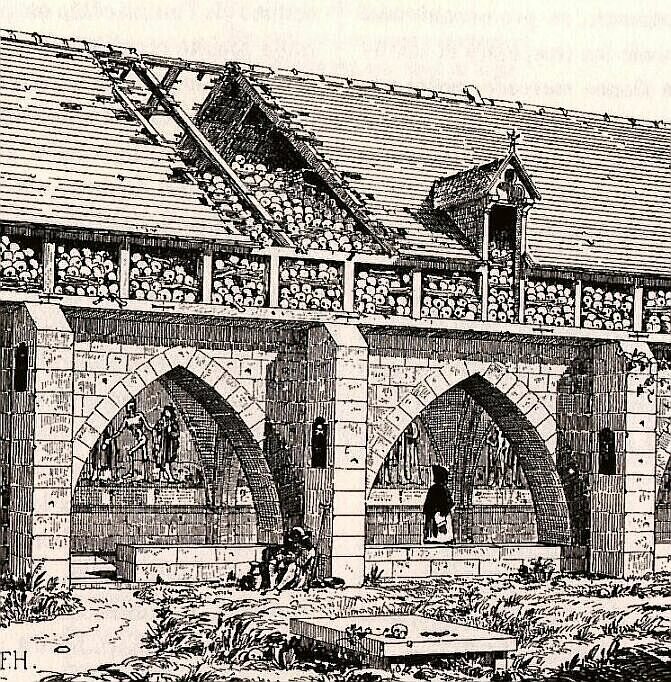
A charnel house at the Saints Innocents Cemetery, Paris. PUBLIC DOMAIN
IN THE DAYS LEADING UP to the French Revolution, Paris was starving. Consecutive years of poor harvests led to bread riots and widespread hunger. In response, Queen Marie-Antoinette purportedly said, “Well, if the people of Paris can’t afford bread, let them eat cake!”
She didn’t say that. In French, the former queen is credited with having said “Qu’ils mangent de la brioche,” or “Let them eat brioche.” But she didn’t say that either. It was a popular phrase to attribute to the aristocracy in the 18th century—one that Swiss philosopher Jean-Jacques Rousseau bandied about quite a bit. But the snappy quote was never pronounced by the queen.
It is, however, indicative of just how important bread was to the French.
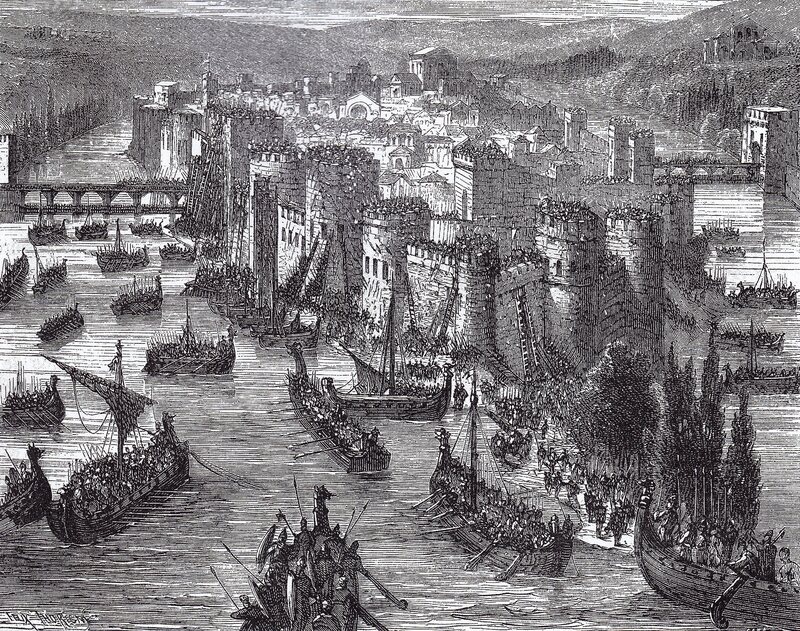
Viking ships besiege Paris, then mostly located on Île de la Cité, in 845. PUBLIC DOMAIN
In the 15th and 16th centuries, the average person in France ate somewhere between 1.5 and 2.5 pounds of bread per day. The rich also enjoyed meat and another two liters of wine each day. But for the poor, bread constituted the majority of their diet. So when wheat was scarce, the French risked starvation.
In Paris, this risk was most acute during a siege.
Paris has endured numerous sieges throughout its long history. The Vikings besieged the city in 845. In 1429, it was Charles VII and Joan of Arc, and in 1870, the Prussians. During these times of austerity, Parisians resorted to eating everything from military horses to street rats and zoo animals. And during one particularly problematic siege, they even ate bread made from human bones.
The road to this grisly act of baking was paved in 1589, after the death of King Henri III. His distant cousin, Henri III of Navarre, was heir to the French throne. But despite having been baptized Catholic, the King of Navarre was raised as a Protestant. At the time, France was in the throes of the Wars of Religion, a prolonged period of strife between Protestants and Catholics that lasted 36 years and took some three million lives. So it’s no surprise that Henri’s succession was far from straightforward: It took a four-year civil war against the powerful Catholic League, an anti-Protestant group allied with the Spanish Crown, for Henri to claim the throne.
After his victory against the League at the Battle of Ivry, Henri moved towards Paris. In the wake of his approaching armies, peasants deserted their lands and took refuge within the city. In time, they may have come to regret the decision.
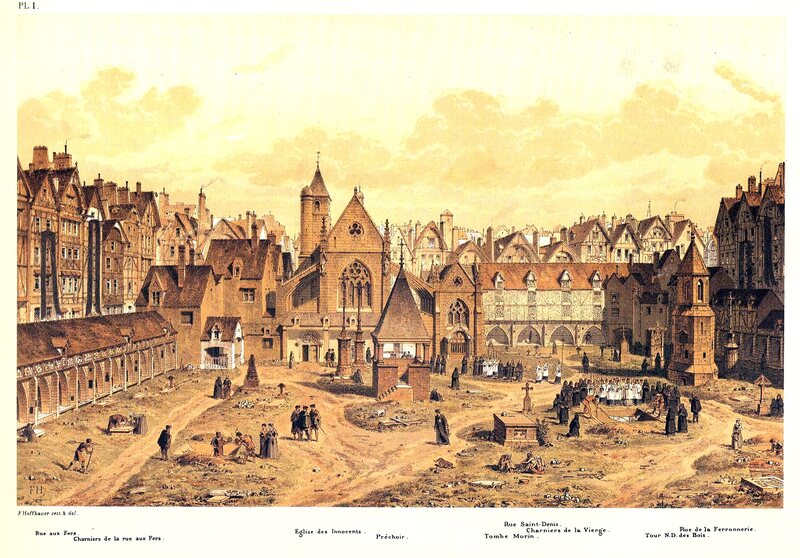
Engraving depicting the Saints Innocents cemetery in Paris, around the year 1550. PUBLIC DOMAIN
Henri took control of several nearby towns, including Nogent-sur-Seine and Provins, endangering the Parisian food supply. Henri also had all windmills burned, essentially making it impossible for Parisians to produce bread.
By May, Parisians were starving. The locals ate horses and mules, followed by pet dogs and cats. They then moved on to grazing on grass from parks, and finally, in August, Parisians resorted to “Madame de Montpensier’s bread.” According to an August 25, 1590, entry by Parisian diarist Pierre L’Estoile, it was made of “the bones of our forefathers” and so named because Madame de Montpensier, a powerful member of the Catholic league, “exalted its invention (without ever desiring to sample it).”
How does one make bread from one’s forefathers? Most accounts explain that the desperate poor first disinterred bones from the mass graves of the Holy Innocents Cemetery. They then ground the bones into flour and baked this flour into bread. Henrico Davilia, an Italian historian and eyewitness, described it as “vile and macabre,” an “abominable food so contagious that, the substance having come from the dead, it so increased by many the number.”
This bone flour was not exactly an ideal replacement for wheat. A lack of gluten, for example, makes it difficult for bone bread to hold together, and disinterred bones are no superfood. As Gabriel Venel wrote in his Précis de matière médicale, “The idea of reducing human bones to powder […] could only come from a mind essentially ignorant and overcome by hunger and by despair. Bones are not floury, and when they are spent by a long stay in humid soil, they contain no nourishing element.”
But even during the duress of a siege, these practical difficulties were less concerning than the image of disinterring the defunct to feed the living. “This bread,” writes Madeleine Ferrières in her Nourritures Canailles, “is bad for one simple reason: It has the taste of sacrilege and anthropology. For many, it’s the abomination of desolation.”
It’s said that the widespread starvation and resulting 40,000 to 50,000 deaths were the deciding factor for King Henri to see the error of his ways. He allowed his army to provide Parisians with food. Soon after, he lifted the siege entirely and converted to Catholicism (and, ironically, embraced the Church’s belief in transubstantiation).
“Paris,” he allegedly said of his conversion, “is well worth a Mass.”
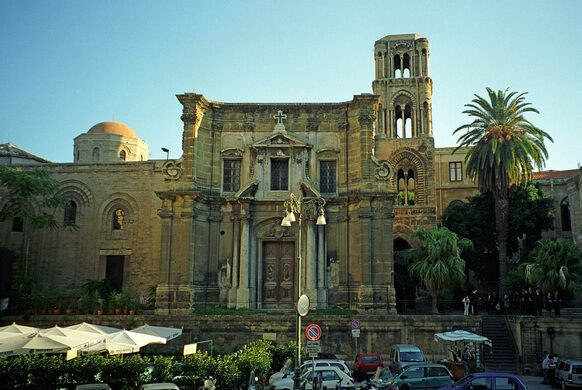
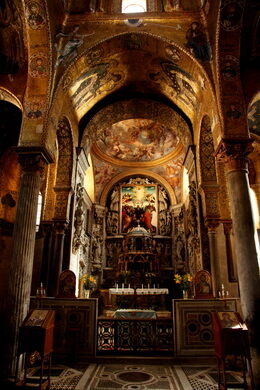
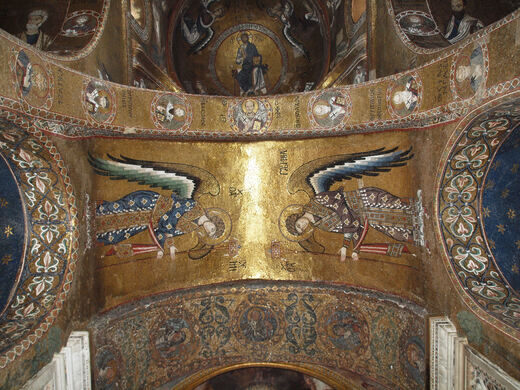
Secluded in the Piazza Bellini behind an unseemly Spanish baroque façade, this 12th-century church is a majestic relic of the era when Palermo was the richest port in western Europe. Known colloquially as the Martorana, the official name is the Church of Santa Maria dell’Ammiraglio, an homage to its patron, the Syrian-Greek adventurer George of Antioch.
The enterprising Antiochene began his military career in the service of the North African Zirid Sultan, Tamim ibn Muizz. After falling out of favor with the sultan’s successor, George escaped north to recently re-Christianized Palermo, where he introduced himself at the court of the ambitious Norman King Roger II. There he soon found himself in command of the ascendant Sicilian kingdom’s navy.
It is through George of Antioch and his successors that we’ve inherited the term admiral, a title the Sicilian Normans derived from the Arabic title “emir al-umara,” roughly translating to “chief military commander.” The military achievements of the world’s first admiral included subduing the rebellious Prince Grimoald of Bari, capturing the Byzantine island of Corfu, and establishing a Norman colony on the coast of modern-day Tunisia.
George died in 1151 or 1152 in the Aegean, attempting to conquer the Byzantine Empire itself, a feat too massive for even his impressive talents. Thankfully this occurred not before he gifted Palermo with the Martorana, one of the highlights of Sicily’s syncretic Arab-Norman architecture style. The church itself has undergone some significant alterations since its construction: Its Romanesque bell tower is a 13th-century embellishment, and the baroque façade is one of the 17th century. The church’s original mosaic-covered apse was tragically destroyed at the same time, replaced with the type of garish altar dressing that could be found interchangeably in any number of Italian churches.
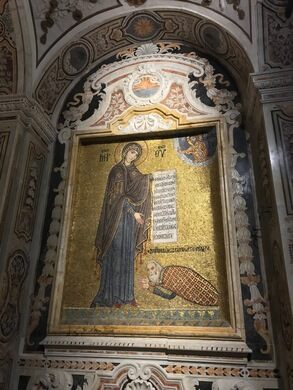
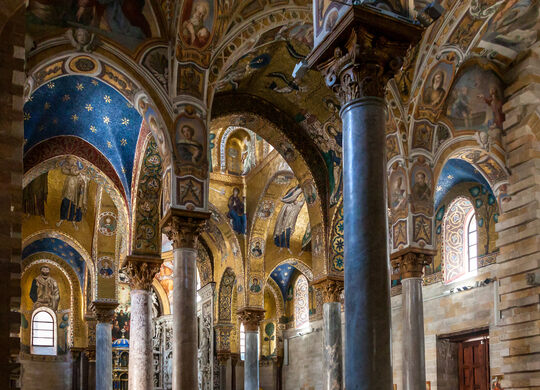
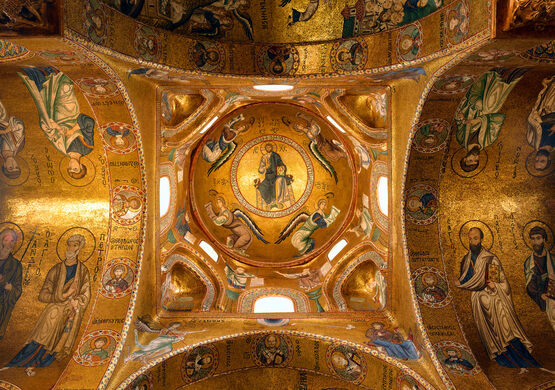
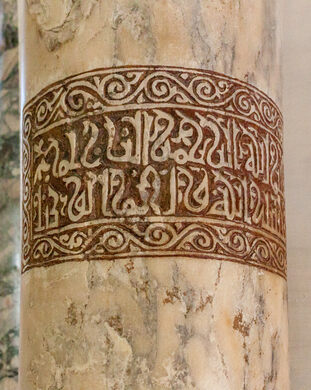
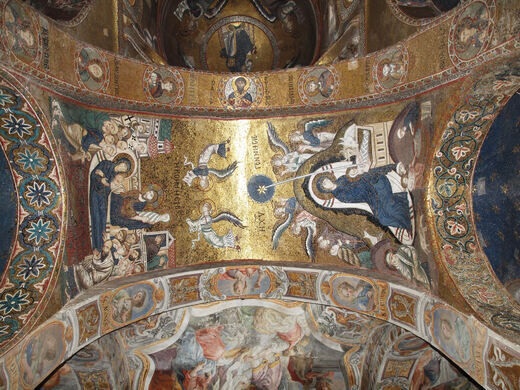
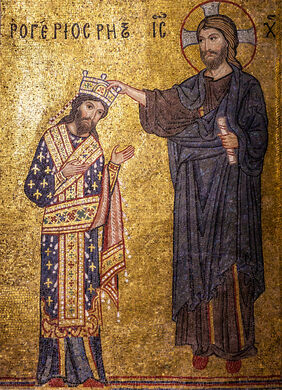
However, partially thanks to 19th-century restoration efforts, enough of the church’s original art remains for visitors to sense its former grandeur. Roughly half of the interior is still draped in original gold mosaics, the work of imported Greek artists. A dazzling representation of King Roger II crowned by Christ greets visitors at the entrance. Across from this, George of Antioch lays prostrate before the Virgin Mary. Elsewhere are detailed biblical stories, and a wooden frieze surrounding the dome contains a Christian hymn written in Arabic script, possibly one of the Syrian-born admiral’s favorite childhood songs.
The church fascinated even non-Christians. The 12th-century Arab explorer Ibn Jubayr—who traveled to such magnificent medieval cities such as Córdoba, Cairo, Baghdad, and Mecca—counted the Martorana as one of the marvels of the world. He described the church as “one of the most marvelous constructions ever to be seen,” writing, “May Allah in his mercy and goodness soon honor this building with the sound of the muezzin’s call!”
Though Ibn Jubayr’s wish for a return of Muslim rule to Sicily never materialized, today the Martorana is home to a minority religious group, the Italo-Albanian Catholic Church. Italo-Albanians, called the Arbëreshë, migrated to Sicily and Southern Italy in the late Middle Ages as the Byzantine Empire slowly disintegrated. The Arbëreshë church’s adherence to the Byzantine rite means that masses in the Martorana are held in ancient Greek, the same as when the church was founded 800 years ago.
A final curiosity of the Martorana is its connection to a popular Sicilian pastry called frutta di Martorana—traditional marzipan fashioned to uncannily resemble real pieces of fruit. It’s said the connection stems from a visit the Hapsburg Emperor Charles V made to the Martorana in September of 1535. Faced with hosting the emperor among the not-yet-ripe oranges of the church garden, the nuns of the Martorana convent created lifelike marzipan oranges to spruce up the place. We all know an emperor hates an unkempt garden, so presumably Charles was pleased by the nuns’ inventive ruse. Today frutta di Martorana is an ubiquitous sight in the windows of Sicilian pasticcerie.
Know Before You Go
Entrance fee is €2, or €1 with proof of payment for other sacred sites in Palermo. More information on these sites is available on the church website.
What Can a Linguist
Learn From
a Gravestone?
Plenty, it turns out.
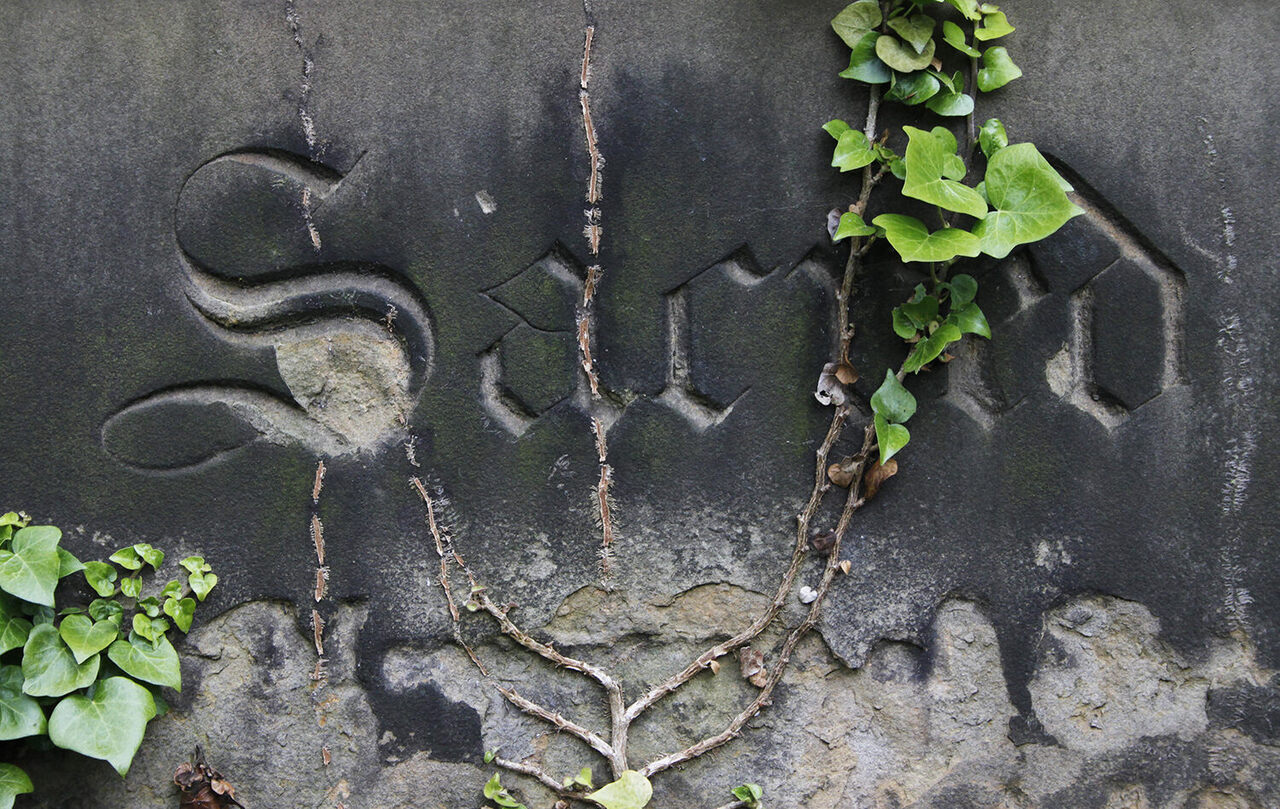
"Sacred," carved in gothic script on a Victorian gravestone with ivy. TREVOR R A DINGLE/ALAMY
Gravestone inscriptions, beyond the simple “name, date of birth, date of death” templates, are both a lasting, permanent record of a life, and also a record that the person buried under has very little control over. They’re also a valuable and extremely under-studied corpus of linguistic data, albeit a frequently misleading and opaque one. Linguists around the world go into graveyards, dutifully record what they say, check them against historical records, and try to find out the answer to the most basic questions. Who are these people, and these communities? What was important to them?
Before we get into inscriptions, I should mention that this article focuses on western Europe and North America. The traditions worldwide are just too varied to write about in one article; some of the people I talked to mentioned that entire dissertations have been written about the gravestones of a single city.
Elise Ciregna, a religious studies professor at Harvard and the president of the Association for Gravestone Studies, says that inscriptions have existed as long as people could chip letters into stone, but that the more detailed inscriptions we see today—biblical verses, poetry, descriptions of the life of the buried—date back to the 1600s. The key running theme of gravestone inscriptions is that they are for the living, and even for a more specific task: they reaffirm and reiterate membership in a group, and the beliefs that are part of the culture of that group. This does not necessarily mean that they are particularly informative about the life of the specific deceased, but they are full of useful, sometimes subtle cues about the community the deceased belonged to, and what they valued.
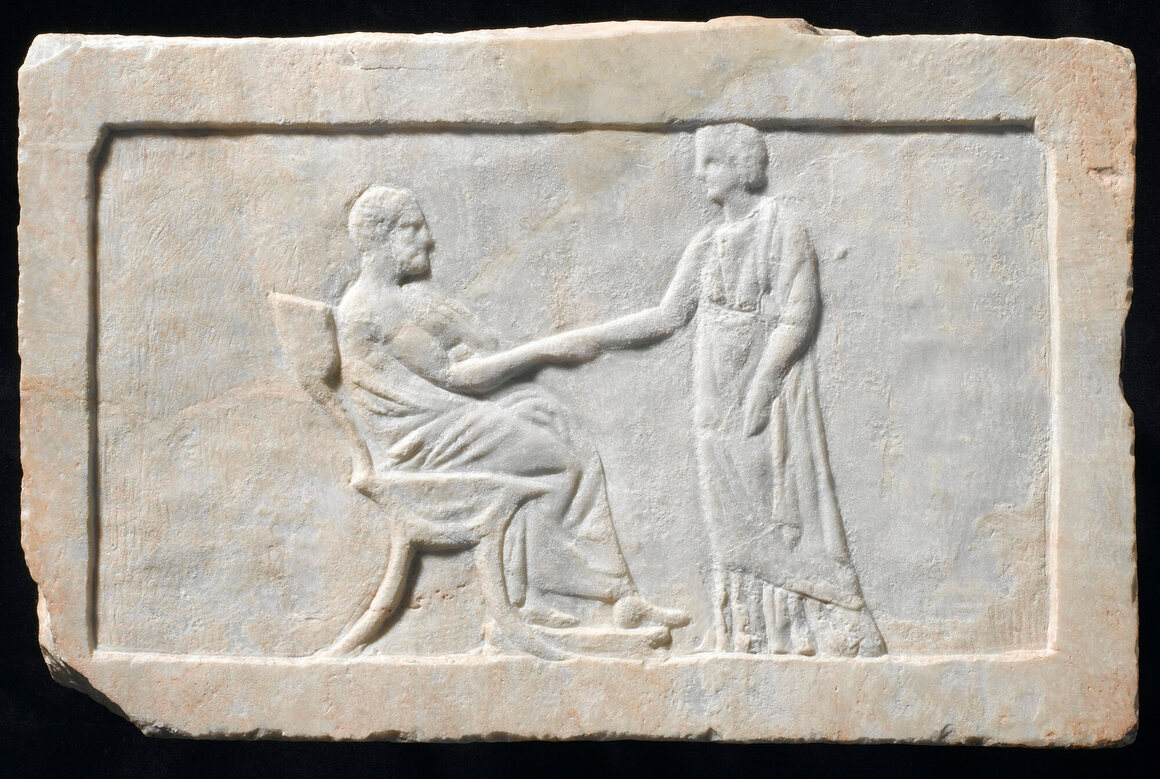
Marble relief marking a grave, Greece, 350-300 B.C., showing a scene of parting and farewell. WELLCOME COLLECTION/CC BY 4.0
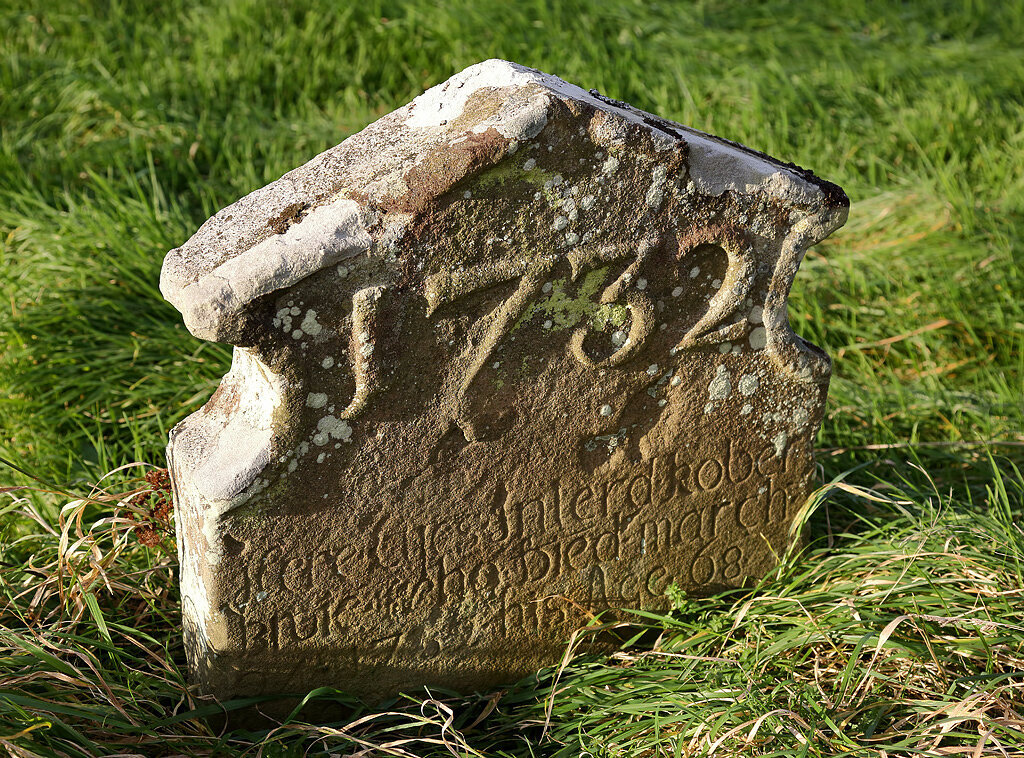
Ciregna mostly studies colonial gravestones in the American northeast. There are language conventions in the 17th century that, she says, are usually associated with the Calvinist faith. They’re pretty gloomy and direct; you see a lot of stuff like “Here lyeth the body of Elisabeth the wife of William Pabodie who dyed May ye 31st 1717 and in the 94th year of her age.” But you can get some pretty decent information from that. Ciregna noted how common it was for women’s inscriptions to mention their relationship to men. “Wife of,” “consort of,” “widow of,” “daughter of.” This kind of information was, to them, the most important thing, which tells you a bit about the gender relations of the time period.
By the 19th century, you’ll see more and more elaborate inscriptions, and also a change in tone. The epitaphs become less gloomy, more celebratory. Here’s one: “She is not dead but sleepeth.” Another, written by Pearl Starr for her mother, the notorious “Bandit Queen” of the American west:
Shed not for her the bitter tear Nor give the heart to vain regret ‘Tis but the casket that lies here— The gem that filled it sparkles yet.
Ciregna ties that newfound optimism and cheer to the changing religion—Calvinism to various less gloomy forms of Protestantism—in the northeast. But there are other clues within the engravings; a sheaf of wheat was commonly used to mean a successful businessman. A broken tree branch or broken column means somebody was cut down too soon. A skull and crossbones, which was common at the time, didn’t mean the person was a pirate; it was a symbol that everybody dies, that death is simply a part of life. Others told of the racist views of the time; Ciregna said she saw more than once a column for a black person whose inscription carried a message of “in life he was black, but in death he joins the white community.”
John O’Regan, a sociolinguist at University College London, told me about one very minimal inscription he found: nothing more than a name, Thomas Beale. Turns out Beale was at one point a successful businessman and trader, but lost much of his fortune. One day he disappeared; his body washed up a few weeks later. Records show that it was believed he died by suicide, such a taboo that he wasn’t given any other information on his gravestone at all, even though his family remained wealthy enough to spring for an expensive box tomb.
The role of the actual stonecutter is also a pretty unheralded but vitally important factor in gravestone inscriptions. Stonecutters during before the late 19th century charged by the letter, and often persuaded clients to choose lengthy poems for epitaphs. One very successful Massachusetts stonecutter, Alpheus Cary, actually wrote a book on appropriate epitaphs; among the standard poems and bible verses were poems he wrote himself.
John O’Regan, of University College London, grew up in Hong Kong, and a few years ago constructed a linguistic corpus of inscriptions from a Protestant graveyard in Macao. O’Regan is a sociolinguist, and was particularly interested in the in-group mentalities he saw in the language of these stones, mostly dating from the 19th and 20th centuries.
“The gravestone inscriptions are teaching the people who visit the cemetery about what the most valued things in one’s life are,” he says. “What is it to be a good mother? What are the values of a good mother?” He specifically looked at content words—nouns and adjectives—and found a great deal of similarity among the stones. One notable thing he found was the predominance of the present simple tense.
The present simple tense is the most basic of English verb forms: I write, she writes, he does not write. It seems so basic that it couldn’t possibly imply any sort of meaning beyond the obvious, but it’s actually fairly specific in its use. It’s most commonly used to make statements of fact, and for schedules and routines. “I wake up at 9 a.m.,” that kind of thing. The present simple is almost too simple; because it by nature can’t carry much detail or nuance. Scientific papers use it regularly, as they’re presented as statements of fact. “Where it becomes interesting is, the language that is used for science, to make scientific truth statements, transfers into what we consider, as human beings, to be our fundamental beliefs, or things we believe very strongly,” says O’Regan. The same verb form that’s used for science is also used for faith, religion, and politics.
These sorts of statements are what O’Regan calls “universalizing truths.” By the way they’re constructed, they leave no real room for debate; if you say, “There is one God,” you are not initiating a discussion. These are meant to indicate conclusiveness and also a more profound truth than, say, “John Smith was a man who believed in a singular God.”
O’Regan also noticed a use, maybe even a more frequent use than in normal conversation, of the definite article “the.” Typically you use “the” along with a noun only after you’ve introduced it, as in, “I went shopping and bought a book and a shirt. The book was for my sister, and the shirt was for my brother.” But the gravestone inscriptions he studied use it right away, with no introduction: “the lord,” “the dead,” “the cross,” “the redeemer.” These imply that the reader of the inscription, whoever it is, is in the same group as the composer of the inscription, and shares the composer’s values. There are even references to “the heathen,” which, for a western cemetery in Macao, certainly meant the Chinese. None of this would necessarily be clear to someone who didn’t share at least some values with the deceased; cemeteries are for the in-group, not outsiders.
Katharina Vajta studies French at Gothenburg University, and wrote a paper a few years ago on gravestone inscriptions in Alsace. Alsace has over the past few centuries been a part of Germany, France, Germany, and France again; its residents originally spoke a German dialect known as Alsatian. “While in theory you might expect [the inscriptions] to be the language of the ruler, that wasn’t always the case, so I started to see if I could find any patterns,” says Vajta. In 1871, Alsace became officially German after the Franco-Prussian war. People buried in Alsace would have fought for both sides, and yet only those who fought for France chose to put their military accolades on their tombstones—despite the fact that the disputed region wasn’t even in France anymore.
That’s not to say that no gravestones in Alsace are written in German. “It’s really inflecting or mirroring the linguistic change in the region,” says Vajta. “You can find gravestones where, in the same family, there are sometimes four, five, ten people buried in the same grave. Some are in French, some in German, some no language at all. You can follow that on a single gravestone.”
Gravestone linguistics are shifty and unclear, for all their definitiveness. How much do you really trust the veracity of the statements? When was the last time you saw “in life, he was a real jerk” on a gravestone? But there’s information there, historical data to be pored over and analyzed. Spooky but productive.


#/media/File:Viking_Siege_of_Paris.jpg)