Good morning, and welcome to the Essential California newsletter. It’s Tuesday, March 21.
There’s a new effort underway to change California’s referendum system.
Assemblymember Isaac Bryan (D-Los Angeles) is set to introduce legislation this week designed to make it more difficult for campaigns to mislead voters when they circulate petitions to qualify a statewide referendum.
My colleague Taryn Luna reports:
“The bill marks the latest showdown in a proxy war between labor and business at the state Capitol and could become one of the most high-profile political fights in California this year.”
Bryan said the original intent of the “very old” process has been “subverted by a small, disgruntled, well-funded, well-powered set of interests that often undermine the collective will of the people of California.”
That echoes how labor unions, government watchdogs and environmental activists have spoken about the election law, which was adopted in 1911. They’ve accused corporations of misleading California voters during the petition gathering process and undermining democracy by using the state’s current referendum rules to delay and sometimes reverse progressive policies.
Bryan’s bill would create more government oversight of the interest groups and paid signature gatherers. One provision would require at least 10% of signatures needed for a referendum to qualify for the ballot to be gathered by unpaid volunteers.
Under the bill, paid signature gatherers would have to register with the California secretary of state and disclose the ballot measure petitions they intend to present to voters, proponents told Taryn.
As the law is written now, groups eyeing a referendum must obtain enough signatures to represent 5% of the number of voters in the previous gubernatorial election.
Once those signatures are certified by the state, the petition becomes a ballot measure in a subsequent statewide election, asking voters to either overturn a previously approved law with a “yes” vote, or uphold it by marking “no.”
The proponents of statewide referendums and ballot measures often contract outside firms to gather the petition signatures. Often, the workers hired to collect those signatures are paid per signature.
And while it’s a crime to intentionally mislead people or make false statements, there isn’t much accountability for signature gatherers. Union officials have accused signature gatherers of deliberately deceiving residents in an effort to get referendums approved for the ballot.
The Times spoke to more than a dozen people last year who said “petition circulators for the ballot measure to overturn AB 257 lied to them about what they were signing.”
That state law, which aimed to increase wages and improve conditions for California fast-food workers, was opposed by a coalition of fast-food corporations and industry trade groups, which utilized the state’s referendum system for a counterattack.
The new rules were supposed to go into effect on Jan. 1, but the referendum to overturn it qualified for the 2024 ballot, delaying implementation until the law is decided by California voters.
Oil companies used a similar strategy this year, successfully stalling a state ban on some oil drilling until a referendum they backed goes to voters — also in 2024.
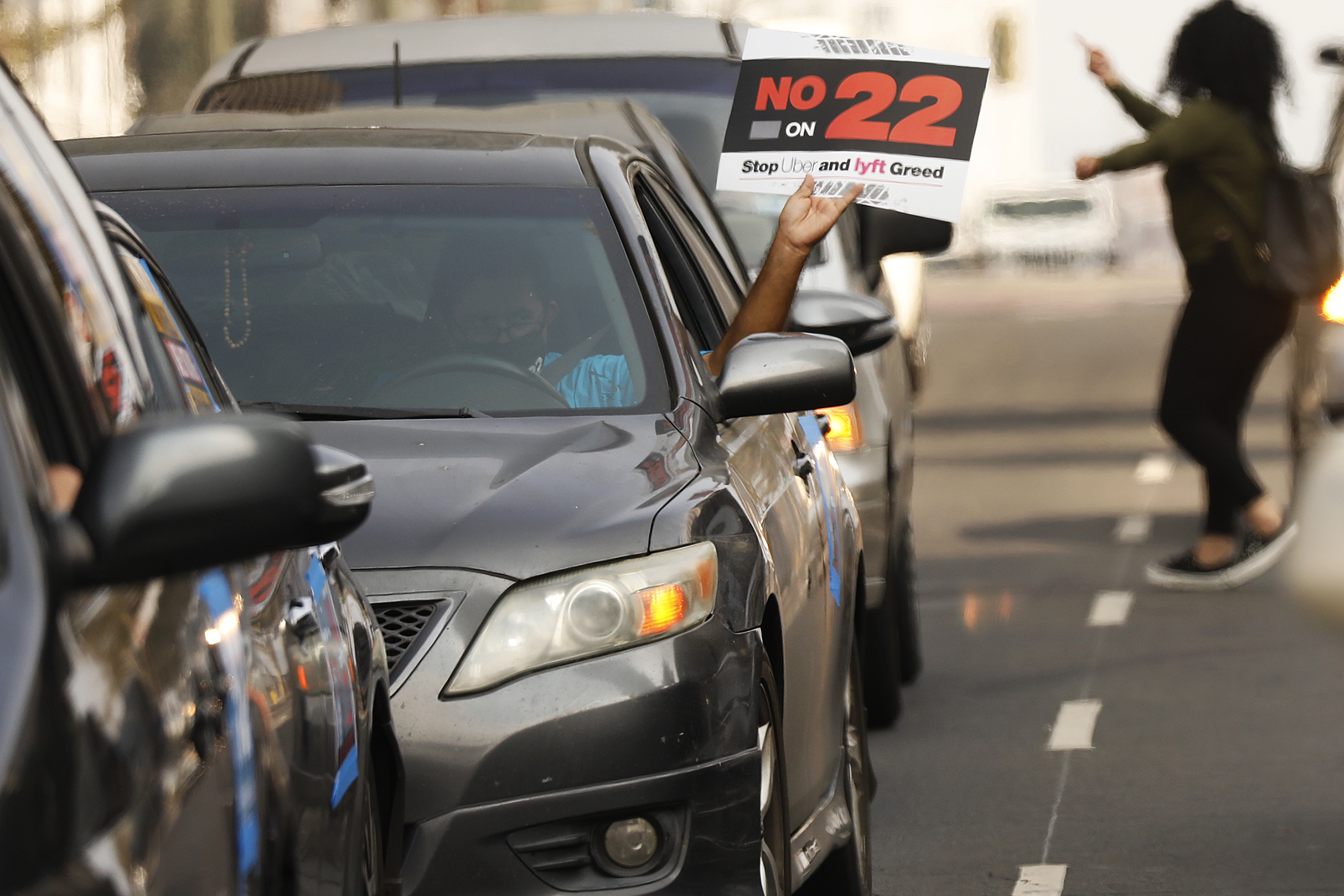
Earlier this month, a California judge upheld most of Proposition 22, a ballot measure backed by Uber, Lyft and other ride-hailing and delivery service companies that overturned part of a 2019 labor law.
“This is a really disgusting abuse of power, and it is an example of one of the ways that corporations currently act as if they’re above the law just by the nature of having enough money to do whatever they want,” Melissa Romero of California Environmental Voters told Taryn. “And voters are sick of it.”
The reform effort has gotten some pushback from the California Chamber of Commerce, Taryn reported this week, with the organization arguing that companies rarely launch campaigns to overturn state laws.
State data from 1912 through this March show groups have tried 96 times in total to get a referendum on the ballot. Of those attempts, 52 qualified for the ballot and have been voted on (two are slated for the 2024 election). And of those referenda, voters approved 22 — roughly 42%.



No comments:
Post a Comment