
13
Featured Events
2009Fox's American Idol debuts its fourth season, featuring record producer and songwriter Kara DioGuardi as the fourth new judge of the show.
1986Ozzy Osbourne is taken to court by the parents of John McCollum, a depressed teenager who shot himself while listening to Ozzy's song "Suicide Solution." The parents claim that their son was driven to suicide by Ozzy's song. The court later throws the case out.
 1984The BBC bans the Frankie Goes to Hollywood song "Relax" due to sexual content. The controversy generates tremendous interest in the song, which reaches #1 UK in June.More
1973Eric Clapton returns to the stage for the first time in about 18 months, playing the first of two all-star shows at the Rainbow Theater in London. Recorded as Eric Clapton's Rainbow Concert, it also features Pete Townshend (of The Who); Steve Winwood, Jim Capaldi, Ric Grech and Rebop Kwaku Baah (of Traffic); and Ronnie Wood (of Faces). Townshend helped set up the shows to get Clapton out of his drug-induced depression. A highlight of both shows is Clapton performing on "Layla."
13
In Music History
Page 1
2011Ed Sheeran announces he has been signed to Atlantic Records.
2008Over five months after its release, Amy MacDonald's This Is The Life album reaches the top of the UK albums chart.
2003British police arrest The Who guitarist Pete Townshend as part of their "Operation Ore" sting operation to crack down on child pornography. Townshend admits to having indecent images of children, but insists that he was doing research for an upcoming book dealing with his own experience with sexual abuse. He is placed on the sex offenders' register for five years.
1979Donny Hathaway commits suicide at age 33 by jumping from the balcony of his 15th floor room at the Essex House hotel in New York City.
1979The YMCA files a lawsuit against Village People for their hit single "Y.M.C.A.," claiming the song is defaming to the organization. The suit is not only dropped, but the Y.M.C.A. adopts the song as their nonofficial commercial jingle after seeing the huge popularity boost the group brings them. Later the US Navy recruits Village People to try to work similar magic for Navy recruitment.
1978The Police start recording their debut album, Outlandos d'Amour. Their budget is just £1,500, which drummer Stewart Copeland borrowed from his brother, entertainment executive Miles Copeland III.
1978Elvis Presley's cover of "My Way" is certified Gold.
1976Bic Runga is born Briolette Kah Bic Runga at Christchurch, New Zealand.
1976Seven employees of Brunswick Records and Dakar Records are tried on charges of withholding more than $184,000 in artist royalties. The case is eventually thrown out, but the reputations of the defendants are irreparably damaged.
1975Minnie Riperton releases "Lovin' You."
1968Dr. K.C. Pollack of the University of Florida audio laboratory reports that tests have determined rock and roll concerts cause noise damage in teenagers' ears.
1963A pre-famous Bob Dylan appears in a British television play called The Madhouse on Castle Street, playing an itinerant musician. No recording exists, but Dylan supposedly played "Blowin' In The Wind" during the show, marking the first broadcast of the song.
1962Gene Chandler releases "Duke Of Earl."
1961Suggs aka Graham McPherson (lead singer of Madness) is born in Hastings, Sussex, England.
Page 1
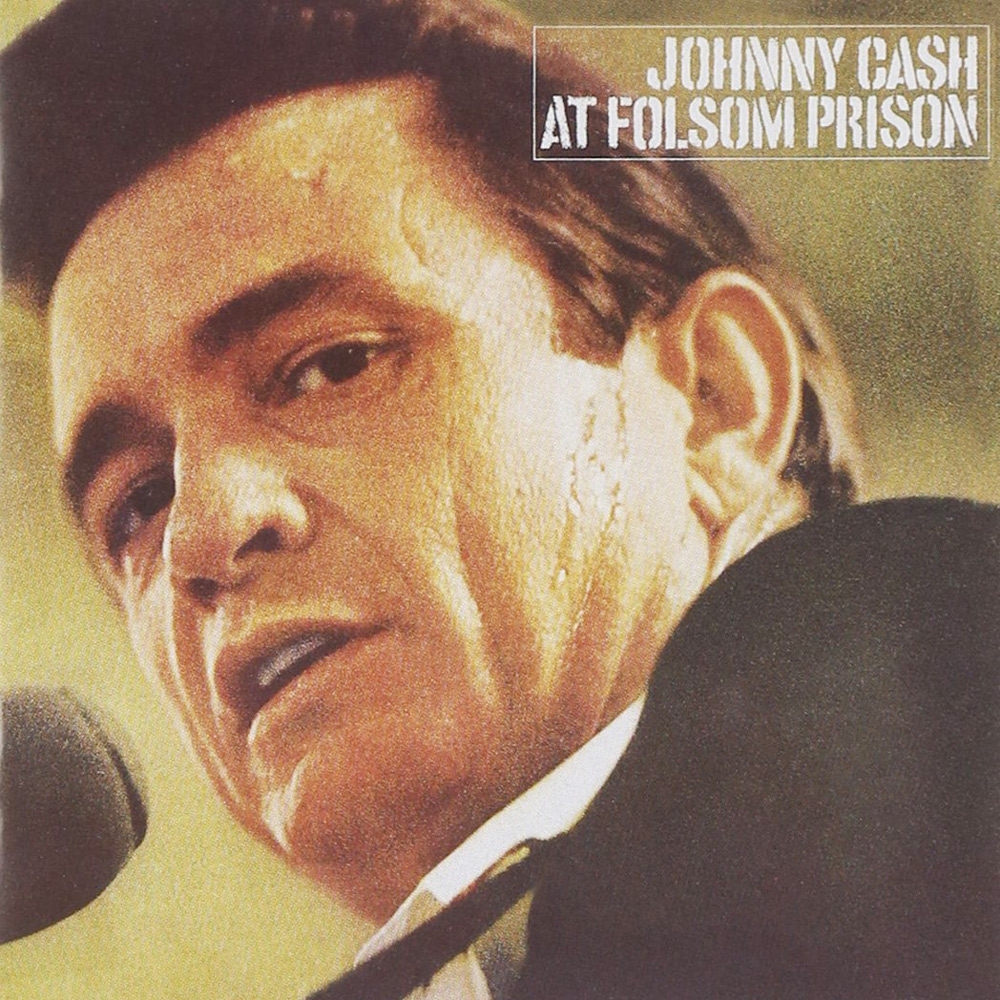
Johnny Cash Plays Folsom Prison
 1968
1968
Johnny Cash plays two shows for inmates at Folsom Prison in California. Unlike his previous prison concerts, they are recorded and packaged into his acclaimed live album At Folsom Prison.
Cash was fading in the mid-'60s, with diminishing audiences and languishing record sales. To revive his career, he looks to an audience that has never let him down: inmates.
Cash had been playing prisons since 1957 and had become an advocate for reform. He had never recorded one of his penitentiary shows, as his label, Columbia Records, didn't like the idea of their artist being associated with a jail. But desperate times change minds, and Columbia agrees that the ploy just might work.
Folsom is a regular stop for Cash and the setting of his 1956 hit "Folsom Prison Blues." This time, he brings his wife June and a mobile recording unit. Bob Johnston, coming off Bob Dylan's Blonde on Blonde album, is the producer. He tells Cash to "Just go out and say who you are," so he starts the show with his soon-to-be-iconic saying, "Hello, I'm Johnny Cash."
As usual, the inmates love what they hear: rough-hewn songs about hard times. The tracklist includes "Cocaine Blues," "Dirty Old Egg-Suckin' Dog" and "Dark as the Dungeon." He does two shows, getting a rapturous reception at each. Sixteen tracks are chosen for the album, all but one, "Give My Love To Rose," taken from the first show.
At Folsom Prison gets his career back on track, landing at #1 on the Country chart and earning him his own TV series the following year. Cash cites it as one of his greatest accomplishments, as it helps draw attention to the plight of prisoners.
Cash had been playing prisons since 1957 and had become an advocate for reform. He had never recorded one of his penitentiary shows, as his label, Columbia Records, didn't like the idea of their artist being associated with a jail. But desperate times change minds, and Columbia agrees that the ploy just might work.
Folsom is a regular stop for Cash and the setting of his 1956 hit "Folsom Prison Blues." This time, he brings his wife June and a mobile recording unit. Bob Johnston, coming off Bob Dylan's Blonde on Blonde album, is the producer. He tells Cash to "Just go out and say who you are," so he starts the show with his soon-to-be-iconic saying, "Hello, I'm Johnny Cash."
As usual, the inmates love what they hear: rough-hewn songs about hard times. The tracklist includes "Cocaine Blues," "Dirty Old Egg-Suckin' Dog" and "Dark as the Dungeon." He does two shows, getting a rapturous reception at each. Sixteen tracks are chosen for the album, all but one, "Give My Love To Rose," taken from the first show.
At Folsom Prison gets his career back on track, landing at #1 on the Country chart and earning him his own TV series the following year. Cash cites it as one of his greatest accomplishments, as it helps draw attention to the plight of prisoners.

No comments:
Post a Comment